PATIENT ARTICLES
Lipoedema: understanding painful legs and disproportionate fat distribution
Lipoedema can cause tenderness, heaviness and changes in body shape. Recognising it helps patients receive appropriate care without blame or unnecessary treatment.
What is lipoedema?
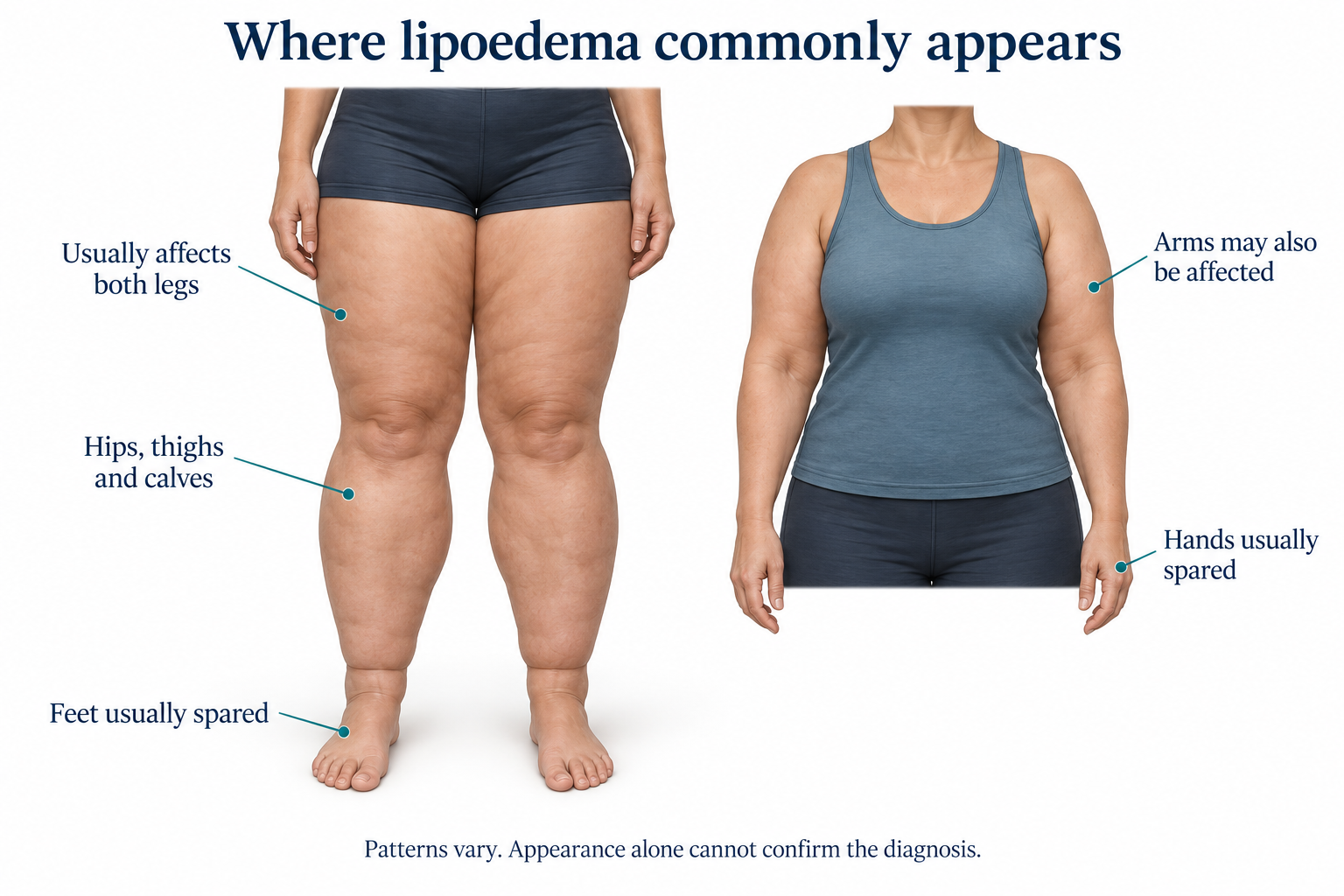
Lipoedema is a long-term condition involving a disproportionate build-up of fat beneath the skin, usually affecting both legs and sometimes the arms. It occurs predominantly in women.
The hips, thighs and calves may appear larger relative to the upper body. Feet are typically spared, sometimes leaving a noticeable “cuff” above the ankles. When the arms are affected, the hands are usually spared.
Common symptoms include tenderness, aching, heaviness and easy bruising. The impact varies: some people have mild discomfort, while others find walking, clothing choices and daily activities difficult. These features warrant assessment, but appearance alone cannot establish the diagnosis.
Sources: NHS: Lipoedema
Why does it develop?
The exact cause remains uncertain. Lipoedema sometimes runs in families, suggesting an inherited susceptibility. Symptoms may first appear or change around puberty, pregnancy or menopause, suggesting that hormones also play a role.
Lipoedema can occur at a healthy body weight. Having the condition does not mean that someone has eaten poorly or failed to exercise. Obesity can, however, coexist with lipoedema and needs its own supportive management.
Sources: NHS: Lipoedema
What happens inside the tissues?
Fat beneath the skin is living tissue containing blood vessels, nerves and supporting connective tissue. Researchers are studying how changes in these structures contribute to lipoedema.
Reported findings include enlarged fat cells, changes in the tissue’s supporting framework, and alterations in small blood vessels and inflammatory signalling. These may help explain tenderness and bruising, but the sequence of events—and the precise cause of pain—remains unsettled.
Lipoedema should not automatically be described as “blocked lymph drainage.” Lymphatic problems can coexist, but they are not established as the starting cause in every patient. Much of the biological evidence comes from small studies, so proposed mechanisms should not be presented as proven explanations.
How is it diagnosed?
Diagnosis rests on a detailed history and physical examination. There is currently no single blood test or scan that confirms lipoedema.
A clinician will consider:
- When the changes began and whether relatives have similar symptoms.
- The distribution of fat and whether both sides are affected.
- Pain, tenderness, bruising and the effect on daily life.
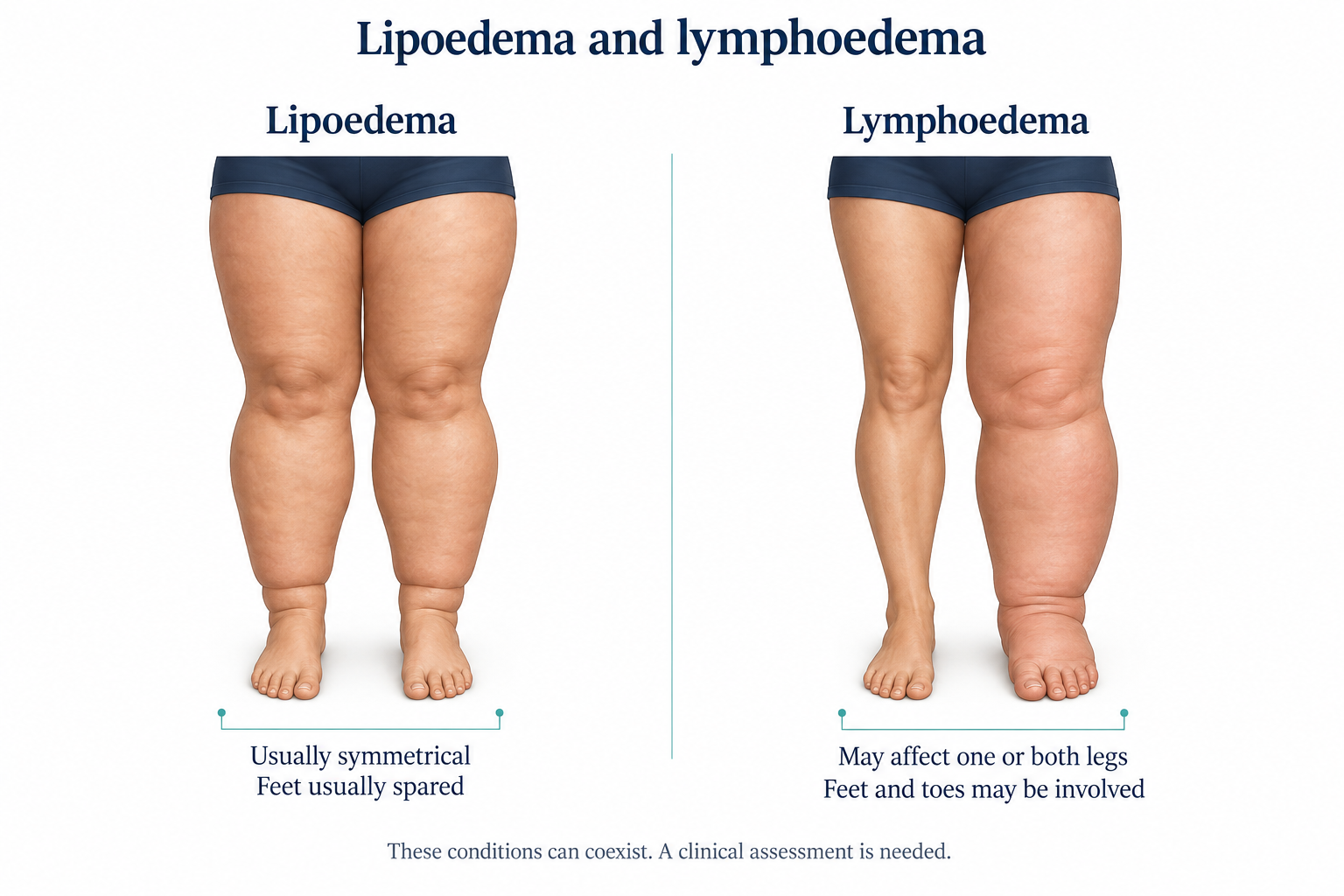
- Other explanations for enlarged or swollen legs.
Lymphoedema involves impaired fluid drainage and may affect the feet. Venous disease, obesity and other causes of swelling may overlap with lipoedema. Tests are selected to investigate these possibilities; they do not replace a clinical assessment.
Sources: Birmingham Community Healthcare
What can treatment achieve?
Treatment aims to improve comfort, movement and quality of life. The plan should reflect symptoms and functional difficulties, rather than appearance alone.
Movement and weight management
Walking, cycling, swimming and other manageable activities can help maintain mobility. An exercise plan should build gradually around the person’s abilities.
Where excess weight is present, sustainable weight reduction can reduce leg volume and improve function, although disproportion may remain. Patients should not be told that weight management is pointless—or promised that it will eliminate lipoedema.
Sources: 2024 specialist guideline
Compression and physical therapy
Properly fitted compression may support tender tissues and relieve discomfort. It does not remove fatty tissue. Garment choice should follow an individual assessment.
Physiotherapy can help with movement and joint symptoms. If lymphoedema is also present, treatment may include specialised lymphatic drainage and other measures to control fluid swelling.
Sources: Birmingham Community Healthcare · NHS: Lymphoedema treatment
Specialist liposuction
Liposuction may be considered for selected patients with persistent symptoms. It removes affected fat and may improve pain and mobility, but it is not a guaranteed cure. More than one procedure and continuing conservative care may be necessary.
Recommendations differ internationally. The German specialist guideline supports carefully selected surgery using techniques intended to protect lymphatic vessels. UK NICE guidance remains more cautious, recommending use only within research because of uncertainty about safety and effectiveness. Potential complications include fluid imbalance, blood clots, fat embolism and local-anaesthetic toxicity. A specialist consultation should explain these uncertainties and risks.
Sources: 2024 specialist guideline · NICE guidance
When should you seek help?
Arrange an assessment if persistent tenderness, bruising or disproportionate limb enlargement affects your daily life.
Sudden swelling in one leg, a hot red painful limb, or fever needs urgent assessment. Chest pain or sudden breathlessness requires emergency care. These symptoms should not be attributed to lipoedema without investigation.
Sources: NHS: Swollen legs
Takeaway
You deserve a careful assessment and a practical treatment plan. The goal is to understand what is causing your symptoms and help you move and live more comfortably.
This article provides general education and does not replace an individual medical assessment.